

If you’ve spent any time exploring downtown Bend, you’ve probably heard of the Pine Tavern. This popular restaurant sits beside Mirror Pond on the Deschutes River, serves its famous sourdough scones with honey butter, and has something you won’t find in your average dining room: a giant ponderosa pine growing right through it.
But the tree isn’t the only reason the Pine Tavern has become a Bend landmark.
The Pine Tavern opened in 1936, when Bend was still very much a timber town. Over the decades, it has served mill workers, soldiers, skiers, tourists, and generations of Bend locals while the city around it transformed from a small logging community into the destination it is today.
Here’s how one restaurant became such a recognizable piece of Bend history.
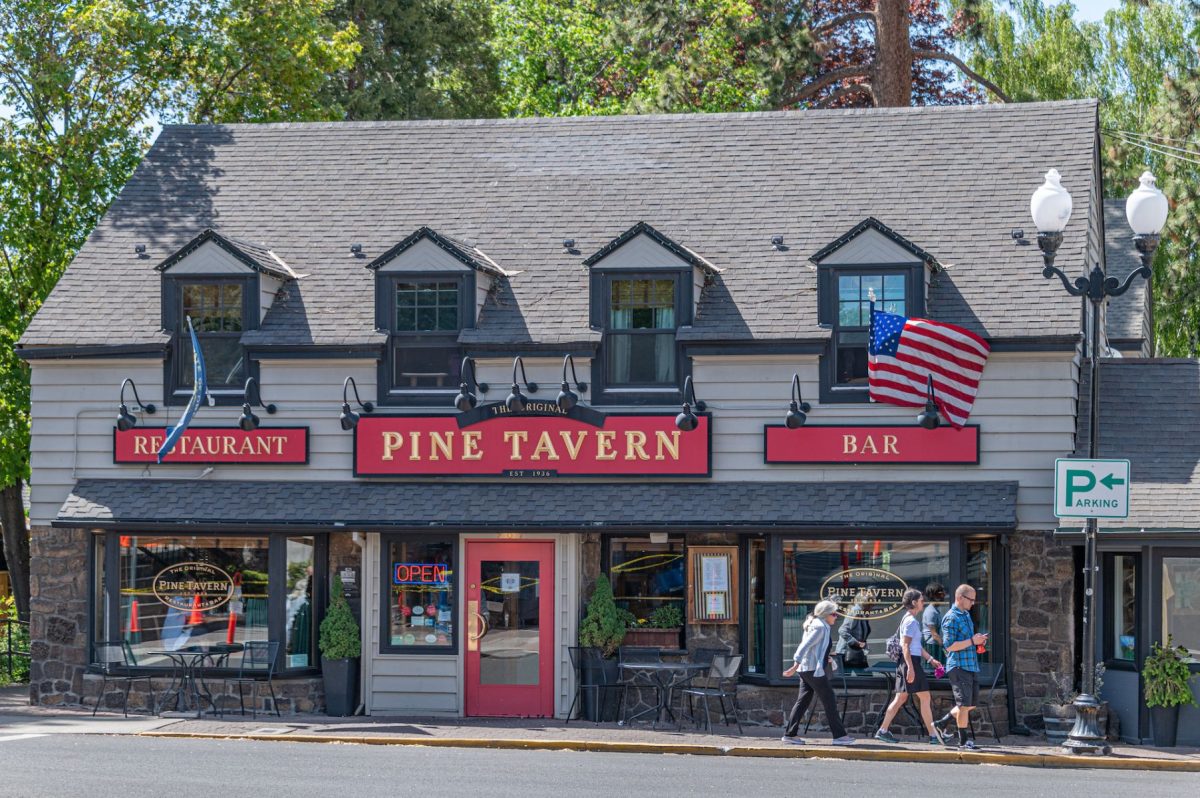
When did the Pine Tavern open?
The Pine Tavern opened in downtown Bend in 1936. But its story actually begins nearly two decades earlier.
Maren Gribskov graduated from Oregon Agricultural College, now Oregon State University, in 1918 with a degree in home economics. According to the Deschutes County Historical Society, Gribskov loved cooking but wasn’t initially sure she’d be able to make a living from her degree.
That changed quickly. In 1919, Gribskov and Martha Bechen opened the O.I.C. Cafeteria in Bend. The restaurant proved successful and moved to several locations over the years.
Eventually, Gribskov partnered with Martha’s sister, Eleanor Bechen, on something more ambitious. The two women obtained a bank loan and built a new restaurant on a scenic piece of property overlooking the Deschutes River.
The Pine Tavern opened just before Christmas in 1936.
Who founded the Pine Tavern?
The Pine Tavern was founded by Maren Gribskov and Eleanor Bechen. That’s notable on its own.
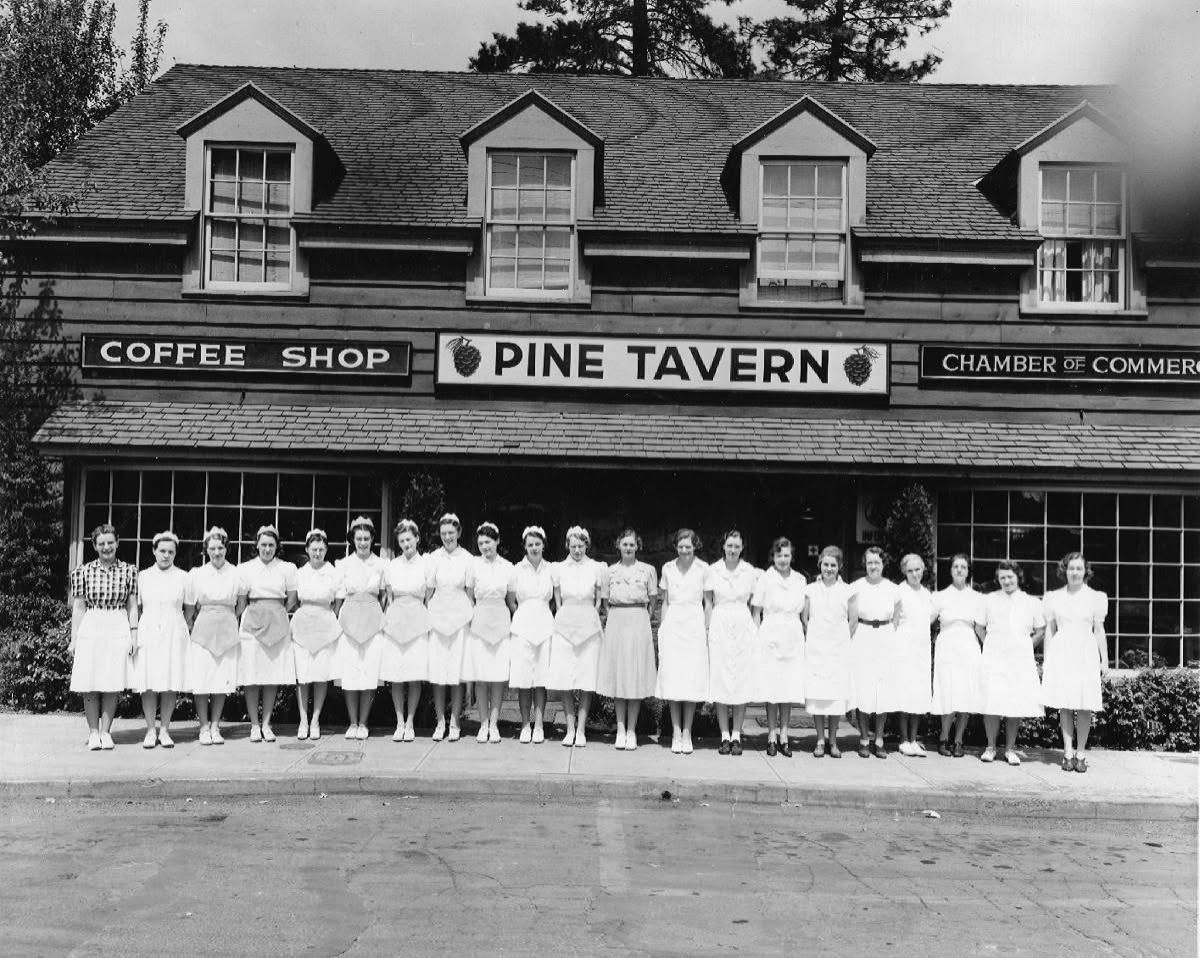
They launched the restaurant while the United States was still emerging from the Great Depression, at a time when women owning and operating a prominent business was far less common than it is today.
The restaurant’s own history describes Gribskov and Bechen as two enterprising women who built a successful business serving Bend’s growing population of timber workers and their families.
And they weren’t simply putting their names on the business. Gribskov was deeply involved in its operation and would remain at the Pine Tavern for roughly three decades.
The restaurant also became a significant employer for women in Bend. The Deschutes County Historical Society notes that, except for an occasional nephew, the O.I.C. Cafeteria and Pine Tavern employed no men until the 1950s.
For a business that started in 1936, that’s a pretty interesting piece of Bend history.
Why is it called the Pine Tavern?
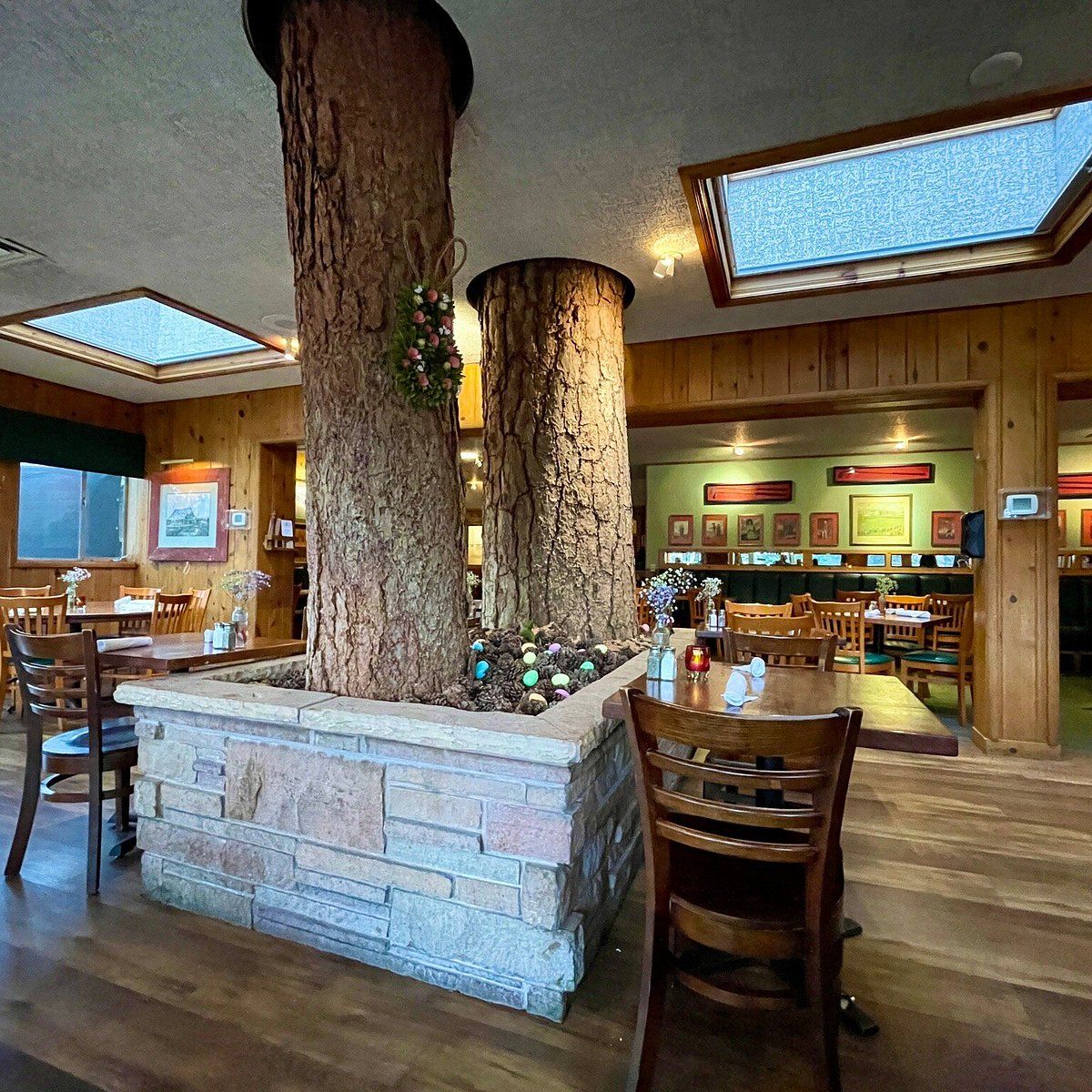
This is one restaurant name that doesn’t require much decoding. Ponderosa pines grew on the property where Gribskov and Bechen built the Pine Tavern. Rather than removing the massive trees as the restaurant expanded, the building was eventually designed around them.
During the Pine Tavern’s expansion in the 1950s, the Garden Room was constructed around two enormous ponderosa pines. The trees passed through the building rather than being cut down.
Suddenly, eating next to a tree wasn’t patio dining. It was indoor dining.
Those trees became one of the Pine Tavern’s defining features and helped turn the restaurant into one of Bend’s most recognizable landmarks.
One of those trees later died. The smaller of the two trees was killed by mountain pine beetles in 1983. Its upper portion was removed, although part of the trunk remained incorporated into the restaurant.
The other tree remains one of the restaurant’s most recognizable features. Today, the giant ponderosa pine still rises through the Pine Tavern dining area and roof. It’s difficult to imagine anyone getting approval for that floor plan today.
What was Bend like when the Pine Tavern opened?
The town of Bend surrounding the Pine Tavern in 1936 looked very different from the Bend that visitors know today. Timber dominated the local economy. Bend’s lumber mills employed thousands of workers during the first half of the 20th century, and the city’s population grew alongside the industry.
Those workers and their families became an important part of the Pine Tavern’s early customer base.
The restaurant’s location beside the Deschutes River would have been familiar, but much of modern Bend wouldn’t have existed yet. The Old Mill District was actually an industrial mill complex rather than a place to shop, eat, or catch a concert.
Bend wasn’t yet known nationally as a mountain biking, skiing, brewery, and outdoor recreation destination.
It was a working timber town. And the Pine Tavern was feeding it.
A place for the community
The Pine Tavern wasn’t just somewhere people went for dinner. It became a gathering place.
According to records preserved by the Deschutes County Historical Society, local service organizations including Kiwanis, Lions, and other civic groups held regular meetings there. Chamber forums took place at the restaurant.
The Pine Tavern also hosted and catered conventions, wedding receptions, Christmas parties, receptions for new teachers, luncheons, and other community events.
Local residents contributed to the restaurant in other ways. During difficult winters, townspeople reportedly helped shovel snow and chop wood. Local women sold the restaurant produce, eggs, and chickens.
It was less like a restaurant that happened to be located in Bend and more like a restaurant woven into the town itself.
What happened at the Pine Tavern during World War II?
World War II brought a new group of customers through the Pine Tavern’s doors. Soldiers stationed at Camp Abbot became regular visitors.
Camp Abbot was an Army training center located south of Bend in the area that later became Sunriver. Thousands of soldiers trained there during the war. When they made their way into Bend, some ended up at the Pine Tavern.
The restaurant was still serving locals, timber workers, and their families, but Bend was also beginning to see occasional tourists and skiers. Those visitors offered a preview of the economic transformation Bend would experience decades later.
There was another challenge during the war: rationing. Ingredients weren’t always easy to get. The Deschutes County Historical Society recounts stories of additional ration coupons finding their way to the Pine Tavern kitchen and local farmers and ranchers helping supply ingredients. The restaurant adapted and kept serving.
How did the Pine Tavern become a Bend landmark?
Part of the answer is simply longevity. Restaurants come and go. The Pine Tavern didn’t.
As Bend grew, the restaurant changed with it. At different points in its history, it shifted between casual family dining and more formal service with white tablecloths and fine china.
The building evolved, too. The major renovation that enclosed the ponderosa pines in the 1950s created one of the restaurant’s most recognizable features.
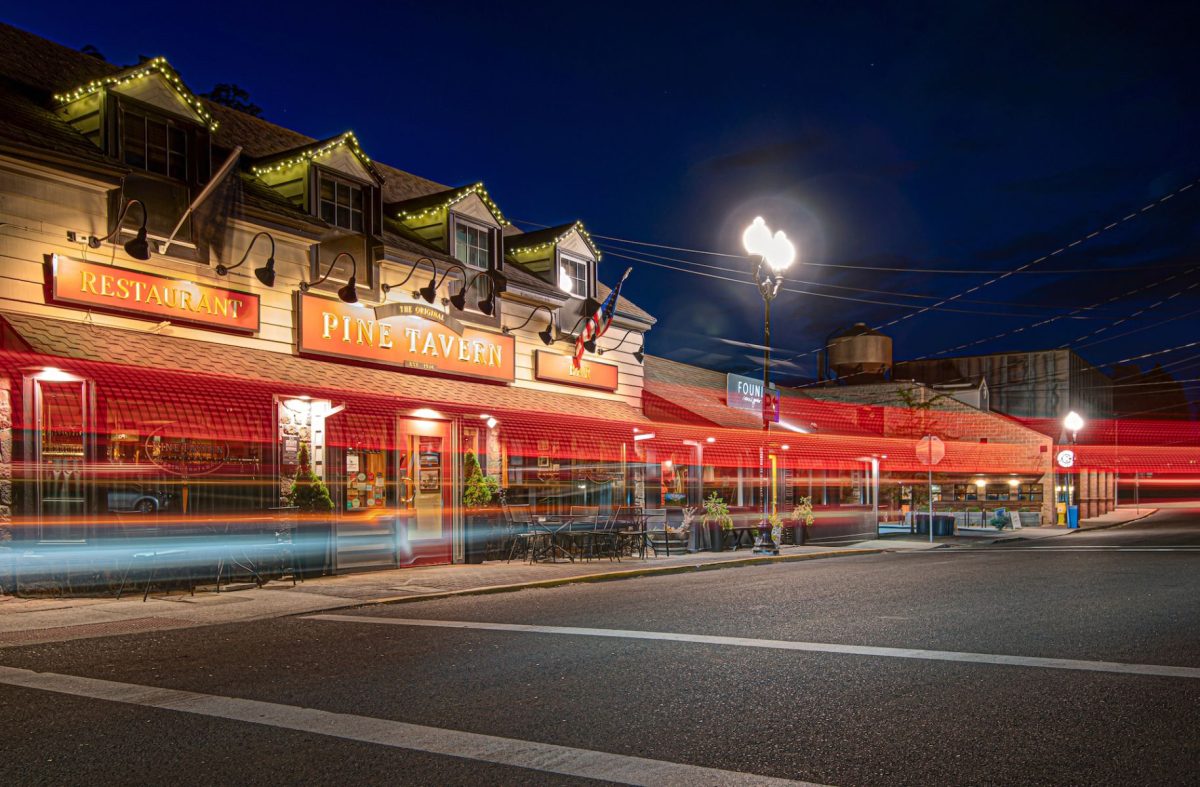
But the restaurant also benefited from its location. It sits beside Mirror Pond in the heart of downtown Bend, overlooking the Deschutes River.
As Bend increasingly turned toward tourism and outdoor recreation, the restaurant found itself sitting in a pretty enviable spot. The town changed around it. The Pine Tavern just kept serving dinner.
Who owned the Pine Tavern after Maren Gribskov?
Gribskov remained associated with the Pine Tavern for roughly three decades. In 1967, she sold the restaurant to Dallas “Tex” Carter. Winifred Roley later owned the restaurant during the 1970s.
Then, in 1982, Bert Bender, Joe Cenarrusa, and Brad Hollebeck purchased the Pine Tavern. Bender brought extensive restaurant experience from Idaho, including time managing the Trail Creek Cabin in Sun Valley and owning Warm Springs Ranch in Ketchum.
That ownership era coincided with another major transformation in Bend. The timber economy was declining. Tourism was growing. And Bend was gradually becoming the outdoor destination visitors recognize today.
Where did the scones come from?
If you’ve eaten at the Pine Tavern, there’s a decent chance you remember the scones. The restaurant’s hot sourdough scones served with honey butter have become almost as closely associated with the Pine Tavern as the tree.
Interestingly, they weren’t part of the original 1936 restaurant. The Pine Tavern traces the scones to Bert Bender’s arrival in the 1980s. Bender had previously worked in Idaho’s restaurant industry and brought the sourdough scone and honey-butter tradition with him.
They stuck. Decades later, the scones remain one of the Pine Tavern’s signature items. Not everything historic has to date back to 1936. Sometimes 40-plus years of people refusing to let you take something off the menu will do.

What happened to the Pine Tavern as Bend became a tourist destination?
The Pine Tavern had originally thrived in a timber town. By the 1980s and 1990s, that town was changing rapidly.
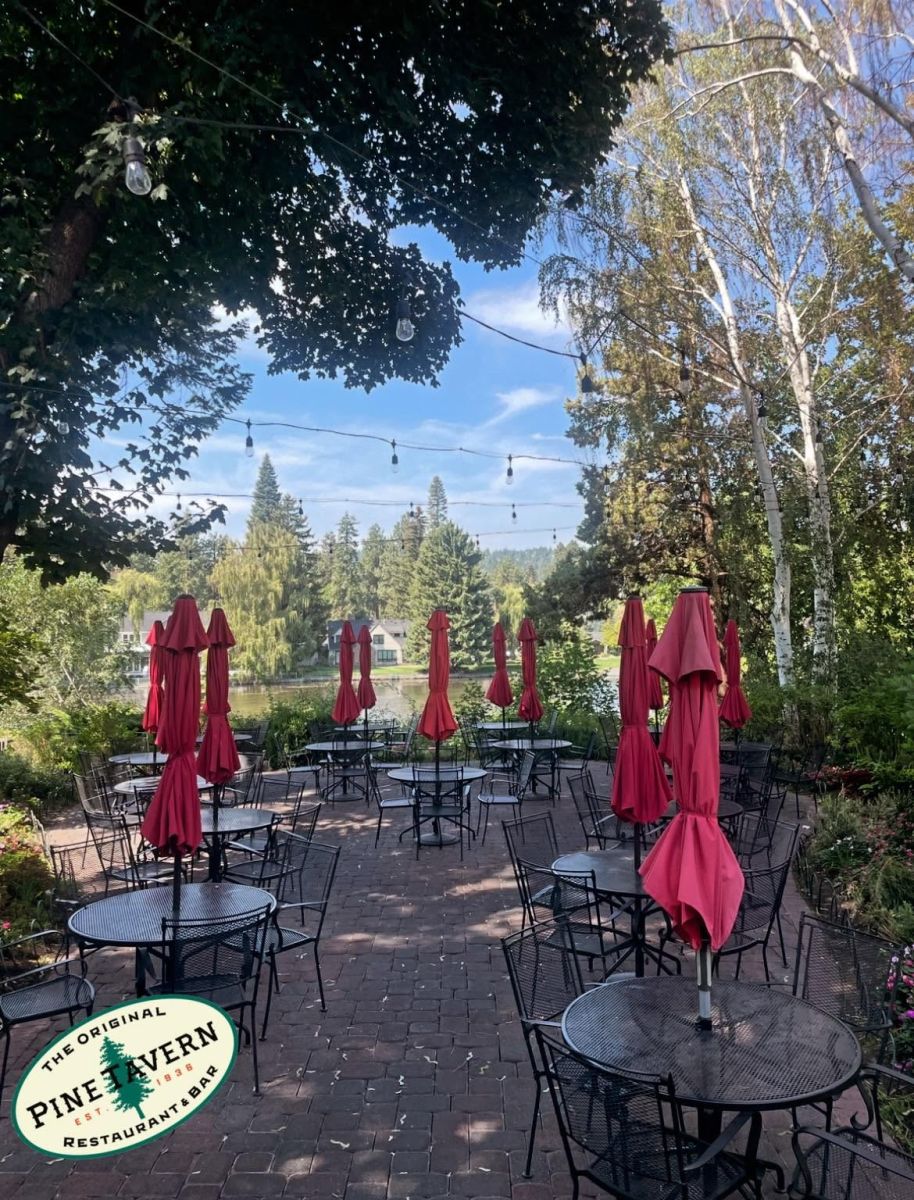
Bend’s timber industry declined while tourism, skiing, outdoor recreation, and eventually the city’s brewery and food scenes grew. The Pine Tavern adapted again. During the 1990s, the garden and patio overlooking Mirror Pond were redesigned. The outdoor dining area became another defining feature of the restaurant, particularly during Bend’s warmer months.
The location that had served timber workers in the 1930s now appealed to visitors coming to Bend for an entirely different reason.
But the river hadn’t moved. Neither had the Pine Tavern.
Where is the Pine Tavern?
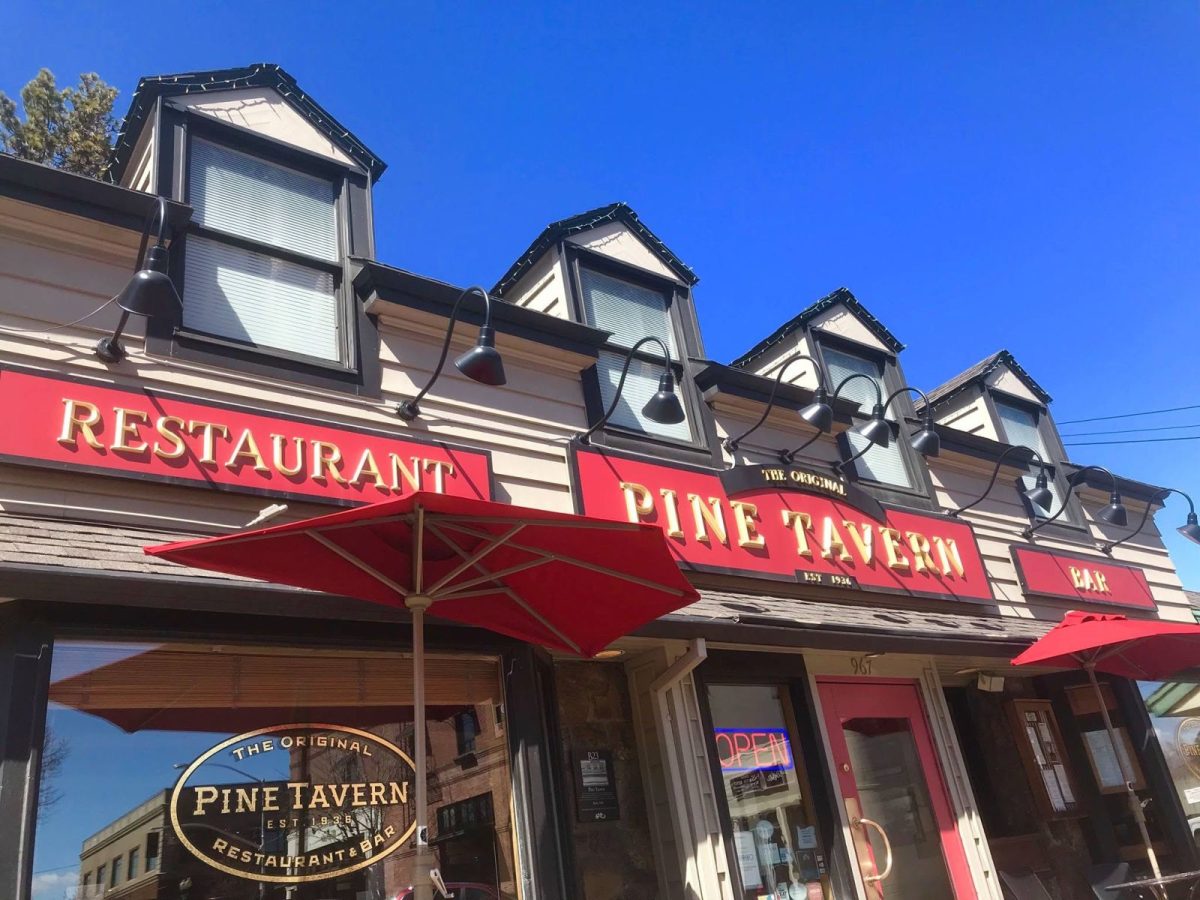
The Pine Tavern is located at 967 NW Brooks Street in downtown Bend. It sits beside Mirror Pond, the calm section of the Deschutes River that runs through the center of town.
Its location makes the Pine Tavern easy to combine with a walk through downtown Bend or nearby Drake Park. For guests staying at Pioneer Park Rentals, that’s especially convenient.
A historic Bend restaurant is considerably more appealing when nobody has to find parking.
Is the Pine Tavern still open?
Yes. More than 90 years after opening, the Pine Tavern is still operating in downtown Bend.
The restaurant continues to occupy its historic riverfront location beside Mirror Pond, with the giant ponderosa pine remaining part of the dining room. Today’s Pine Tavern serves American-style dishes and still serves its well-known sourdough scones with honey butter.
In 2014, the restaurant was sold to restaurateur Bill McCormick, marking another chapter in a business that has changed hands remarkably few times considering how long it has existed.
Why is the Pine Tavern important to Bend history?
There are older buildings in Bend. There are newer restaurants. But relatively few businesses allow you to trace so much of Bend’s evolution from one location.
The Pine Tavern opened when timber dominated the economy. It served soldiers during World War II. It became a gathering place for local organizations and celebrations. It watched Bend transition away from timber and toward tourism. And it remained open as the small Central Oregon town around it became one of Oregon’s best-known travel destinations.
Meanwhile, one enormous ponderosa pine has been standing there through most of it. That’s some job security.
See a piece of Bend history for yourself
The Pine Tavern isn’t a reproduction of historic Bend. It was actually there. It was serving meals when timber drove Bend’s economy, when soldiers trained south of town during World War II, and long before anyone was debating which Bend brewery had the best IPA.
Today, you can still sit beside Mirror Pond, eat beneath a ponderosa pine growing through the building, and visit a restaurant that’s been part of the community since 1936.
For reservations, their current menu, and more information, visit their website.
Stay close to downtown Bend at Pioneer Park Rentals
One of the best things about staying at Pioneer Park Rentals is being close enough to downtown Bend to leave the car behind. Our condos are less than a mile from downtown, making it easy to walk to local restaurants, shops, parks, and historic landmarks along the way.
Pine Tavern is a perfect example. From Pioneer Park Rentals, it’s about a 15-minute walk or a four-minute drive to the restaurant. Head downtown for dinner, finally see the famous ponderosa pine you’ve been reading about, explore a little more of downtown Bend, and walk back to your unit afterward. When so much of Bend is this close, getting there can be part of the experience.
Book Your Next Vacation
Browse our entire selection of rentals today and find the perfect match for your vacation!

